
Viajes a medida a Algarve
Golden cliffs, secret coves, and the end of Europe at Sagres.
¿Qué es un viaje a medida a Algarve?
A custom Algarve tour kayaks through the Benagil sea cave (entry from the water, before the boat tours start), drives the western cliff roads at Sagres and Cabo de São Vicente, arranges a private catamaran along the rock formations, and locates the interior market towns — Silves, Monchique, Tavira — that most visitors miss entirely. The key is getting on the water early and off the main beaches by midmorning.
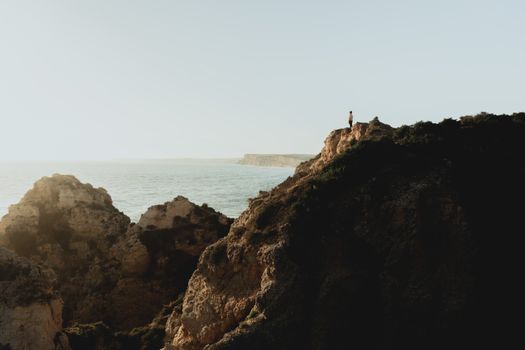
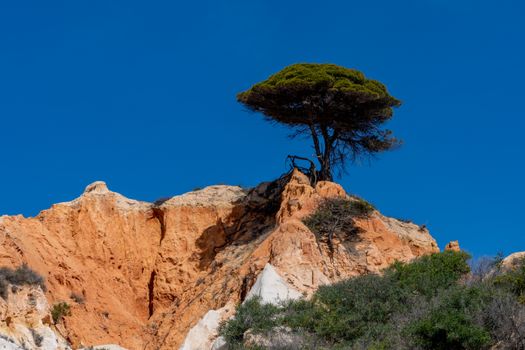
The Algarve's limestone cliffs are a geological accident that produced one of Europe's most distinctive coastlines. The sea has carved arches, grottoes, and sea stacks from the ochre and cream rock between Sagres and Faro, creating formations that look architectural but predate any human involvement. A custom Algarve tour moves between these clifftops and the whitewashed villages of the interior, where the tourist economy has never fully arrived.
The region has two coastlines. The Sotavento (eastern, lee side) is calmer, with long barrier-island beaches and fishing towns that catch real fish. The Barlavento (western, windward) faces the Atlantic directly — rougher, wilder, and where the most dramatic cliff formations are. A curated itinerary sequences both, using the morning calm for kayaking and the afternoons for the interior market towns.
May through June and September through October deliver Algarve at its best: sea swimming (water 20–22°C), empty cliff paths in the morning, and the almond and carob harvests adding scent to the inland drives. July–August is peak season — excellent weather but roads and beaches crowded. Tours start at €1,800 per person. Seville is three hours by car for a natural extension.
¿Cuándo es la mejor época para visitar Algarve?
Nuestros meses recomendados son May–June, September–October. Aquí una vista mensual con notas de planificación.
Las mejores experiencias en Algarve
Momentos seleccionados por nuestras agencias locales. Cada viaje incluye una selección de estas — o algo mejor si lo encontramos.
Itinerarios de muestra
Dos puntos de partida — tu itinerario real es a medida. Construimos desde aquí.
7 días clásico
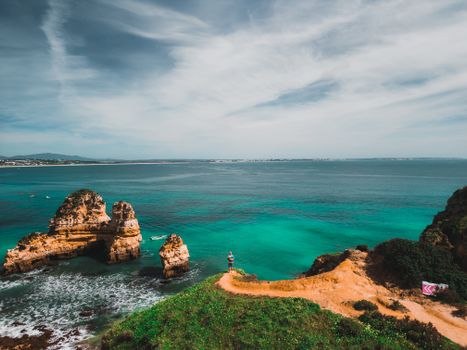
- 1Día 1: Arrival & Lagos Old TownLagos is the Algarve's most characterful town: 16th-century city walls, a slave market museum that honestly confronts Portuguese colonial history, and the Ponta da Piedade cliff formation visible from the harbor wall. Check in, walk the old town, and eat at a tasca on the Rua da Barroca — petiscos, local white wine, and grilled local fish. The cliffs at Ponta da Piedade are worth a late afternoon walk when the light turns them copper.
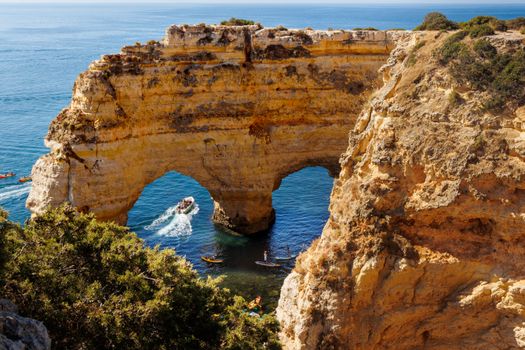
- 2Día 2: Benagil Cave Kayak & Ponta da PiedadeKayak departure from Lagos beach at 7:30 a.m. — the only way to enter Benagil cave before the motorboat tours start. The cave opens from the sea into a cathedral of rock with a round hole in the ceiling (the 'eye') through which morning light pours. Your guide paddles you through Praia da Marinha's arch complex and the Algar Seco rock pools before the day-trippers arrive. Afternoon at Ponta da Piedade for the clifftop walk above the sea stacks.
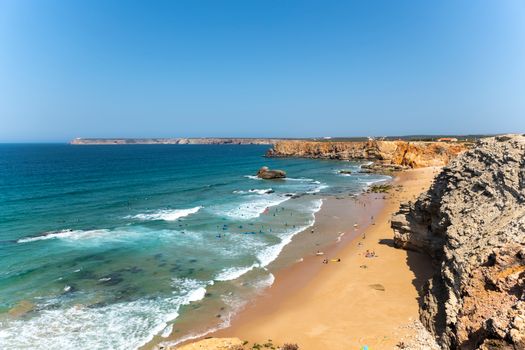
- 3Día 3: Sagres & Cabo de São VicenteDrive west to Sagres — the southwestern corner of continental Europe, where Prince Henry the Navigator established his navigation school in the 15th century. The Sagres Fortaleza sits above 70-meter cliffs; the wind is constant and the Atlantic is very large from up here. Then Cabo de São Vicente, the most southwesterly point in Europe: a lighthouse above vertical cliffs. Lunch in Sagres village on grilled swordfish. The drive back passes Praia do Amado and Carrapateira beach.
- 4Día 4: Private Catamaran — Caves & DolphinsFull-day private catamaran charter from Portimão or Lagos: the route passes Praia da Rocha's sandstone cliffs, the three-arch Três Castelos formation, Praia de Carvoeiro, and the Algar Seco rock platform. Anchor for swimming in secluded coves. Atlantic dolphins frequently follow the boat in the open water between Lagos and Portimão. Your captain provides lunch on board; you bring the sunscreen.
- 5Día 5: Silves — Moorish Castle & Orange GrovesSilves was the Moorish capital of al-Gharb (the Algarve's Arabic name) until the Portuguese reconquest in 1249. The sandstone castle above the town is the best-preserved Moorish fortress in Portugal. Your historian guide walks the ramparts and explains what this city-state looked like at its height. Then: the orange groves and citrus cooperatives of the Silves agricultural interior, where the Algarve's famous table oranges still grow. Lunch at a rural quinta.
- 6Día 6: Tavira & Eastern Algarve (Ria Formosa)Drive east to Tavira — the Algarve town that tourism forgot. Roman bridge, whitewashed churches, and a fish market on the river where the tuna catch comes in. From Tavira, a short boat crosses to the barrier island beaches of the Ria Formosa natural park — a 60km lagoon system of salt marshes and dune islands that's also a major flamingo habitat. Afternoon at Praia do Barril, reached on a toy train through the marshes.
- 7Día 7: Monchique Hills & DepartureMorning drive into the Serra de Monchique — the Algarve's inland mountain range, where eucalyptus and cork oak forests replace the coastal tourist infrastructure entirely. Monchique village for medronho (arbutus berry brandy) and smoked meats. The drive south from the Fóia peak (902m) reveals the full coastal panorama in good weather. Airport transfer to Faro.
14 días en profundidad
- 1Día 1: Arrival & Lagos Old TownLagos city walls, slave market museum, Ponta da Piedade afternoon walk, tasca dinner.
- 2Día 2: Benagil Cave Kayak7:30 a.m. kayak from Lagos beach, Benagil cathedral cave, Praia da Marinha arch complex, Algar Seco rock pools.
- 3Día 3: Sagres & Cabo de São VicentePrince Henry's navigation school, Sagres Fortaleza cliffs, Europe's southwestern tip, grilled swordfish lunch.
- 4Día 4: Private Catamaran CharterFull day on the rock coast: Três Castelos arch, Carvoeiro cliffs, dolphin watching, swimming from private coves.
- 5Día 5: Silves Moorish CastleBest-preserved Moorish fortress in Portugal, medieval history, orange grove quinta lunch.
- 6Día 6: Tavira & Ria FormosaRoman-bridge town, tuna fish market, boat to barrier island beaches, flamingo lagoon system.
- 7Día 7: Monchique HillsSerra de Monchique, cork oak forest, Fóia peak panorama, medronho tasting.
- 8Día 8: Praia da Rocha & PortimãoPortimão's working fish auction (lota) at 9 a.m. — one of Portugal's largest sardine processing centers. Tuna and sardine grilled at a riverside restaurant directly from the catch. Afternoon at Praia da Rocha: the golden sandstone cliffs that started Algarve tourism in the 1960s, when the formations were more visible and the hotels less so.
- 9Día 9: Alte & Interior VillagesAlte is the Algarve's most authentically preserved village: a white-and-blue settlement in a river valley with a 16th-century church and a font fed by a natural spring. Drive through the interior cork country — the Cork Route passes estates where cork bark is harvested by hand every nine years, an agricultural calendar unchanged since the Moors introduced the practice. Lunch at a traditional restaurant in the valley.
- 10Día 10: Surf Lesson at Praia do AmadoPraia do Amado on the west coast is the Algarve's best surf beach — consistent Atlantic swells, a surf school rated among the best in Portugal, and almost no beach bar infrastructure to distract from the waves. Morning surf lesson with your instructor. Afternoon at the clifftop viewpoint above Carrapateira, where the western coast's raw Atlantic character is clearest.
- 11Día 11: Castro Marim & Spanish BorderThe eastern Algarve's Castro Marim has a Crusader castle above salt marshes that are still harvested commercially — the same salt trade that made medieval Portuguese ports rich. Drive to the Guadiana river border with Spain, lunch at a restaurant in Alcoutim on the Portuguese bank with a view of the Spanish village across the water. Return along the river road through orange orchards.
- 12Día 12: Loule Market & AlmancilLoulé's Saturday market is the Algarve's finest: honey, almonds, figs, carob, handmade terracotta pots, and local cheese. Then the Igreja de São Lourenço in Almancil — a small baroque church whose interior is entirely covered in 18th-century azulejo tile panels depicting the life of St Lawrence, widely considered the finest example of early Portuguese tile art outside Lisbon.
- 13Día 13: Faro Old Town & Ria Formosa BoatFaro's walled old city (Cidade Velha) is a pleasant surprise: Roman walls, a Gothic cathedral with a tower view over the lagoon, and the Museu Municipal in a former convent. Afternoon private boat tour of the Ria Formosa inner channels — the flamingo colonies, the oyster farms, and the deserted island beaches inaccessible by road.
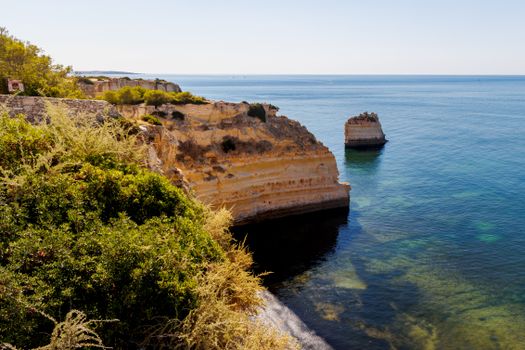
- 14Día 14: Final Morning at Praia da Marinha & DepartureLast morning at Praia da Marinha — voted repeatedly as one of Europe's most beautiful beaches, a small cove between two limestone headlands. The color of the water in good light is genuinely extraordinary. Espresso in Carvoeiro. Airport transfer to Faro.
Información práctica
Preguntas frecuentes
When is the best time to visit the Algarve?+
May–June and September–October are ideal: temperatures 22–26°C, sea swimming comfortable, and the cliff paths uncrowded. July–August is very busy — beaches packed, roads congested, prices elevated. April has spring flowers and empty roads but the water is cool for swimming (17–18°C). The Algarve has 300+ days of sunshine per year; even November and March are often warm enough for coastal walking. The interior villages are genuinely off-season October–April.
What is the Benagil cave and how do I visit it properly?+
Benagil is a sea cave accessible only from the water — a swimming hole inside a cathedral of carved limestone, lit by a circular skylight. The tourist motorboat tours are overcrowded and can't enter the cave proper. The correct way to visit: kayak or paddleboard from Benagil beach before 9 a.m. (when boat tours start), or hire a private boat. A custom tour arranges the early kayak route that includes three additional caves and the Marinha arch before tourists arrive.
Is the Algarve suitable beyond beach holidays?+
Substantially. The Serra de Monchique mountains offer serious hiking and cork oak forest. The interior towns (Silves, Alte, Loulé, Tavira) have genuine market cultures and medieval architecture. The Ria Formosa natural park is one of Europe's most important wetlands. The west coast (Sagres, Carrapateira) has a completely different character — raw Atlantic, surf culture, and landscapes that feel nothing like the resort coast.
What is the Ria Formosa?+
Ria Formosa is a 60-kilometer lagoon system along the eastern Algarve, protected as a natural park since 1987. A chain of barrier islands separates the Atlantic from a network of salt marshes, tidal channels, and sand dunes. It's a major habitat for migratory birds (including flamingos, little egrets, and spoonbills) and supports one of Portugal's most productive shellfish industries. Access is by boat from Faro or Tavira — the interior channels and barrier beaches are only reachable from the water.
What should I eat in the Algarve?+
The Algarve is Portugal's seafood heartland: grilled sardines (at their best June–September), cataplana (copper pot stew of clams, pork, and vegetables), percebes (barnacles), fresh tuna from Tavira, and the carob-and-almond sweets that reflect the Moorish agricultural inheritance. Inland: smoked Monchique sausages, rabbit stew, and medronho brandy. The local table wines (Algarve DOC, increasingly good) are underpriced. Best eating in Tavira, Lagos, and the interior tascas — avoid the beachfront tourist restaurants.
La gente también pregunta
- What is the most beautiful beach in the Algarve?
- How do I get to the Benagil cave?
- Is Lagos or Albufeira better for the Algarve?
- What is the Algarve famous for?
- Can I drive to the Algarve from Lisbon?
- What are the best day trips from the Algarve?
- Is the western Algarve different from the eastern Algarve?
- What are the best restaurants in the Algarve?
¿Listo para planificar tu viaje a Algarve?
Chatea con nuestro concierge IA — dos minutos para describir el viaje de tus sueños.