
Voyages sur mesure à Loire Valley
Renaissance châteaux and the cradle of French wine.
Qu'est-ce qu'un voyage sur mesure à Loire Valley?
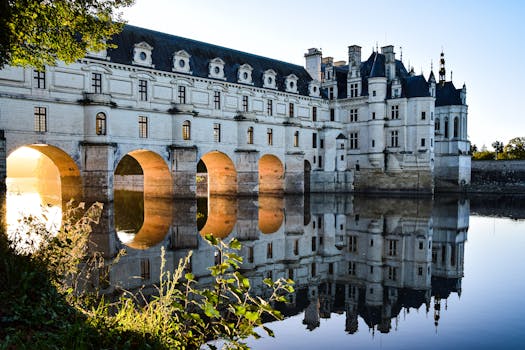
A custom Loire Valley tour walks the Chambord double-helix staircase with an architectural historian who explains the Leonardo attribution, arrives at Chenonceau before 9 a.m. for the gardens in morning light (and the story of the two women who fought over the château), tastes Vouvray Chenin Blanc at a tuffeau cave winery, and cycles the Loire cycling route between châteaux rather than driving.
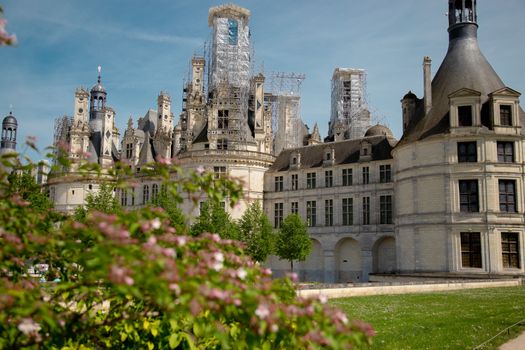
The Loire Valley was the playground of French royalty for two centuries — and the châteaux they built along the river are the most concentrated collection of Renaissance architecture anywhere in the world. Chambord (440 rooms, a double-helix staircase attributed to Leonardo da Vinci) and Chenonceau (spanning the Cher river on arches, fought over by two women for 40 years) are the headline acts, but the Loire valley has 300 châteaux within 100 kilometers. A custom Loire tour navigates this abundance without turning it into a checklist.
The valley is also a serious wine region, producing four entirely distinct styles on one river: the Muscadet shellfish wines at the Atlantic mouth, the Sauvignon Blancs of Sancerre and Pouilly-Fumé in the east, the Chenin Blancs of Vouvray and Savennières in the center (some of the longest-lived white wines in France), and the Cabernet Franc reds of Chinon and Bourgueil. A tour that visits three châteaux and one winery misses the region's wine depth.
May through June delivers the Loire in its best light: the vineyard floors green, the Chenonceau garden in full flower, and the morning mist on the river that Turner painted. September brings the harvest. The TGV from Paris to Tours takes 55 minutes. Tours start at €2,600 per person.
Quelle est la meilleure période pour visiter Loire Valley?
Nos mois recommandés sont May–June, September–October. Voici une vue mensuelle avec des conseils de planification.
Meilleures expériences à Loire Valley
Des moments sélectionnés par nos agences locales. Chaque voyage inclut une sélection de ces expériences — ou quelque chose de mieux.
Itinéraires types
Deux points de départ — votre vrai itinéraire est sur mesure. Nous construisons à partir de là.
7 jours classique
- 1Jour 1: Arrival & Tours Old TownTours is the Loire valley's largest city — a university town with a medieval old quarter (Vieux-Tours) around the Place Plumereau, where half-timbered 15th-century houses have been occupied by café terraces. Check in, walk the cathedral of Saint-Gatien (Gothic facade with two towers of different periods, the stained glass from the 13th to 15th centuries), and the fine arts museum in the former Archbishop's Palace. Dinner at a Tours brasserie: rillettes de Tours (the local charcuterie tradition), andouillette, and a Vouvray demi-sec.
- 2Jour 2: Chambord — The Royal ChâteauArrive at Chambord at 9 a.m. (before the coach parties at 10:30). The château's double-helix staircase is the architectural masterpiece — two spiraling staircases that wind around the same central axis without intersecting, attributed to Leonardo da Vinci who was at Amboise (17km away) in the final years of his life. Your architectural historian explains the attribution controversy and what the staircase's geometry tells us about 16th-century mathematical thinking. The rooftop terrace — a forest of chimneys and turrets designed for the royal court to watch the hunt.
- 3Jour 3: Chenonceau — The Ladies' ChâteauChenonceau spans the Cher river on five arches — the only French château built over a river. The story is specifically about two women: Diane de Poitiers (mistress of Henri II, who gave her the château) and Catherine de Médicis (his queen, who seized it after his death). Your guide narrates the decades-long contest through the architecture: Diane's garden (left bank), Catherine's garden (right bank), and the gallery spanning the river that Catherine added. Arrive before 9 a.m. for the kitchen gardens in morning light. Afternoon: Amboise, where Leonardo died in 1519.
- 4Jour 4: Vouvray Cave Winery & Chenin BlancVouvray is carved from tuffeau limestone — the same soft white rock used for the Loire châteaux and for wine cellars, which maintain a constant 12°C year-round. Private tasting at a winery whose caves have been dug into the cliffside since the 12th century: Vouvray in dry (sec), off-dry (demi-sec), and fully sweet (moelleux) styles, all from the Chenin Blanc grape. A good Vouvray moelleux from a great year (1997, 2002, 2018) develops for 50 years. Your sommelier guide provides the decade-by-decade tasting.
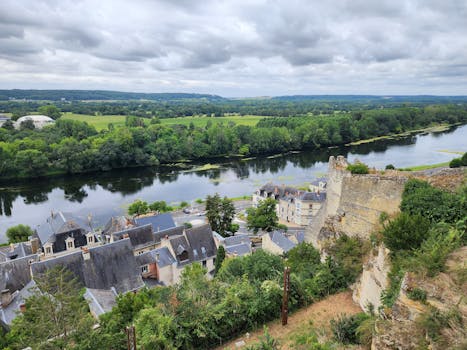
- 5Jour 5: Chinon — Red Wine & Medieval CastleChinon is where Joan of Arc persuaded the Dauphin (future Charles VII) to give her an army in 1429 — the castle above the town was the royal court in exile. Then: Chinon wine, the Loire's most serious red. Cabernet Franc in a river valley that produces a more mineral, cooler-climate expression than Bordeaux. Private tasting at a Chinon domain: the iron-and-pencil character of the young wine, the development after ten years, and the grand cuvée that wine merchants tell their clients costs twice what it does. Lunch in Chinon: rillettes, goat cheese, river fish.
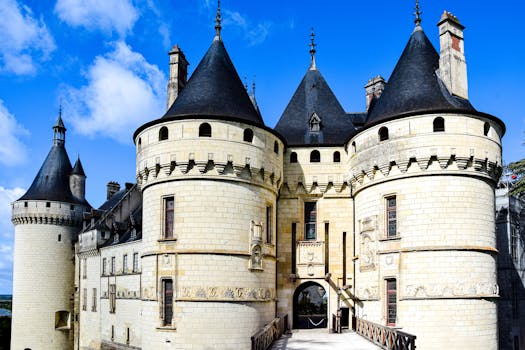
- 6Jour 6: Loire Cycling — Château to ChâteauThe Loire à Vélo cycling route is one of Europe's finest: flat riverside paths (the Loire is navigable and has a wide flood plain) connecting villages and châteaux without the car traffic of the D-roads. Day route by electric bike: Chaumont-sur-Loire (contemporary garden festival), Amboise (Leonardo's Clos Lucé manor), and back to Tours. The châteaux are visible from the levee paths; your guide leads the route and knows which diversions are worth the detour.
- 7Jour 7: Villandry Gardens & Sancerre Wine — DepartureVillandry is the Loire's most famous garden château — six levels of formal Renaissance garden, each level with a different theme: the love garden (geometric box hedges symbolizing the stages of love), the music garden, the kitchen garden (300 varieties of vegetables in ornamental patterns), and the water garden. Morning there. Then east to Sancerre (2 hours) for a final tasting of the Sauvignon Blanc that made this hillside famous — before the TGV from Tours or Bourges to Paris.
14 jours en profondeur
- 1Jour 1: Arrival & ToursPlace Plumereau half-timbered medieval square, Saint-Gatien cathedral, rillettes and Vouvray dinner.
- 2Jour 2: Chambord9 a.m. arrival, double-helix Leonardo staircase with architectural historian, rooftop terrace and hunting-forest view.
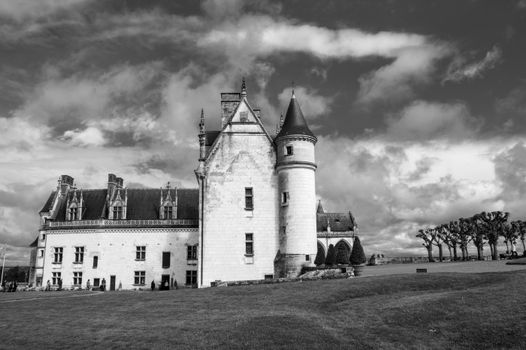
- 3Jour 3: Chenonceau & AmboiseBefore 9 a.m. for garden light, Diane vs Catherine story, Leonardo's Clos Lucé manor and death room.
- 4Jour 4: Vouvray Cave WineryTuffeau cave cellars at 12°C, Chenin Blanc in three styles, 20-year vertical of demi-sec.
- 5Jour 5: Chinon Red Wine & CastleJoan of Arc's persuasion site, Cabernet Franc domain tasting, rillettes and goat cheese lunch.
- 6Jour 6: Loire Cycling RouteElectric bike on the levee paths: Chaumont contemporary gardens, Amboise, riverside château views.
- 7Jour 7: Villandry GardensSix levels of formal Renaissance garden, love and kitchen gardens, 300 vegetable varieties in ornamental patterns.
- 8Jour 8: Azay-le-Rideau & UsséAzay-le-Rideau is the Loire château that best reflects in water — built on an island in the Indre river in the early 16th century, its white tuffeau walls mirrored in the moat. The story: a financial minister built it, Francis I had him arrested on false charges and seized the château. Château d'Ussé nearby is the château that inspired Perrault's Sleeping Beauty — white towers above a forest, visible from the Loire levee path. Afternoon picnic on the Indre riverside.
- 9Jour 9: Blois Royal Château & Poisoning HistoryThe Royal Château of Blois is the Loire's most historically layered: four royal wings built in four different architectural styles (medieval, Louis XII Gothic-Renaissance, François I early Renaissance, Gaston d'Orléans classical). Your historian specializes in the Italian Wars that brought Renaissance architecture to France — the same wars that brought Leonardo to Amboise. The famous staircase in the François I wing, and the Cabinet des Poisons (the room where Catherine de Médicis allegedly stored her poisons — and where Henri de Guise was assassinated in 1588).
- 10Jour 10: Troglodyte Villages & Tuffeau LifeThe tuffeau cliff villages between Saumur and Tours are a distinct Loire civilization: houses carved directly into the limestone cliff, inhabited for a thousand years. Rochecorbon, Vouvray, and Montsoreau all have cliff-face communities where the stone walls serve as the rear of the house. Your guide walks you through occupied troglodyte homes (by invitation), abandoned medieval caves, and a tuffeau-carved wine cellar that has been making sparkling Saumur since the 19th century using the Champagne method.
- 11Jour 11: Saumur — Sparkling Wine & Cavalry MuseumSaumur is the home of Crémant de Loire — the Loire's answer to Champagne, made by the traditional method in the same tuffeau caves that give the wine its mineral character. Private tasting at Bouvet-Ladubay or Langlois-Chateau: the difference between vintage and non-vintage Crémant, the varieties permitted (Chenin, Chardonnay, Cabernet Franc). Then the Cadre Noir: the French National Cavalry School, the only institution outside Spain's Real Escuela Andaluza to maintain classical dressage tradition.
- 12Jour 12: Sancerre & Pouilly-Fumé Wine CountryDrive east to the Loire's eastern wine appellation: Sancerre's hilltop town above Sauvignon Blanc vineyards on flint (silex) and chalk (calcaire), and Pouilly-Fumé directly across the river with its 'gunflint' mineral character. Private tasting at a Sancerre domain: the grapefruit and herb character that made New Zealand's version famous, but more mineral and less fruit-driven in the original. Then Pouilly: the difference between Fumé Blanc and Menetou-Salon, the appellation's less-celebrated neighbor.
- 13Jour 13: Bourges Cathedral & FarewellBourges Cathedral (1195–1324) is the Gothic cathedral that equals Chartres and exceeds it in structural boldness — five naves instead of three, no transept, and flying buttresses that create a profile like a ship's keel from the outside. UNESCO-listed and undervisited compared to Chartres. Your architectural guide explains the difference between French Gothic traditions. Farewell dinner at a Tours restaurant: pike-perch in beurre blanc (the Loire river fish in the Loire butter sauce), Vouvray, and tarte Tatin from the Sologne.
- 14Jour 14: Final Morning Market & DepartureSaturday at the Tours market on the Place de la Résistance: rillettes, goat cheeses (Sainte-Maure-de-Touraine AOC, the oldest registered French goat cheese), tuffeau mushrooms (grown in the caves), and Loire honey. TGV to Paris or airport transfer.
Informations pratiques
Foire aux questions
How many Loire Valley châteaux should I visit?+
Quality over quantity. Three to four châteaux across a week allow genuine engagement with each rather than château fatigue. The essential four: Chambord (architecture and scale), Chenonceau (story and beauty), Villandry (gardens), and one smaller château for contrast — Azay-le-Rideau or Cheverny. Everything else is supplementary. The châteaux need historical context to be more than large houses — a custom tour provides a single historian guide who explains each in relation to the others.
What Loire Valley wine should I prioritize?+
The Loire has four distinct wine identities: Vouvray/Savennières (Chenin Blanc — the most distinctive and longest-lived white wines in France), Chinon/Bourgueil (Cabernet Franc reds — more mineral and elegant than Bordeaux), Sancerre/Pouilly-Fumé (Sauvignon Blanc — the world's benchmark for the variety), and Muscadet (the shellfish wine of the Atlantic coast). A custom tour builds tastings around your preference among these four styles rather than treating all Loire wine as equivalent.
What is the double-helix staircase at Chambord?+
Chambord's central staircase consists of two interlocking spirals that wind around the same central core without ever meeting — anyone ascending on one staircase can see anyone descending on the other through the open landings, but they never share a step. The design has been attributed to Leonardo da Vinci since at least the 19th century; Leonardo was living at the Château du Clos Lucé in Amboise (17km away) when Chambord was designed in 1519, and Francis I commissioned both the château and Leonardo's residency. The attribution remains unproven.
Is the Loire Valley cycling route worth doing?+
The Loire à Vélo is one of Europe's finest cycling routes — flat riverside paths on the flood plain levees, connecting villages and châteaux without the traffic of the main roads. Electric bikes make the 240km route accessible to non-athletic cyclists. The route between Tours and Amboise (20km) passes Chenonceau's access road and the Vouvray cliff villages. The section from Saumur to Chinon passes Ussé and Azay-le-Rideau. A custom tour provides electric bikes, luggage transfers, and picnic lunch preparation.
What is tuffeau and why does it matter for the Loire Valley?+
Tuffeau is a soft white limestone that forms the Loire Valley's geology — easy to carve, it was used for every château (the characteristic white stone), every wine cellar (constant 12°C temperature), and every cliff village (houses carved directly into the rock). The stone can be cut with hand tools when first extracted and hardens with exposure. It explains why the Loire châteaux look white rather than the grey limestone of most French Gothic buildings, why the wines age so differently in their cave cellars, and why entire villages are underground.
Les gens demandent aussi
- Which Loire Valley château should I visit first?
- Is the Loire Valley worth visiting without a car?
- What is Vouvray wine?
- How far is the Loire Valley from Paris?
- What is the best time to visit the Loire Valley?
- Is Sancerre wine from the Loire Valley?
- What is special about Chenonceau château?
- Can I cycle between Loire Valley châteaux?
Prêt à planifier votre voyage à Loire Valley ?
Discutez avec notre concierge IA — deux minutes pour décrire le voyage de vos rêves.