
定制游 Singapore
A tropical island that runs like a Swiss watch.
定制旅游介绍 — Singapore?
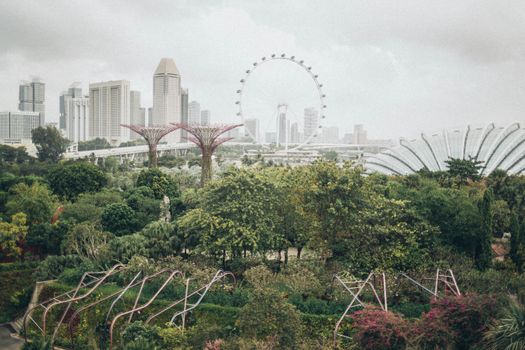
A custom Singapore tour visits the Gardens by the Bay Supertree Grove at dawn before the tourist crowds (the OCBC Skyway bridge at 7 a.m. above the cooling mist), eats at a hawker center with a food guide who navigates the Hokkien mee, char kway teow, and chicken rice stalls that have been perfecting single dishes for decades, walks the Peranakan heritage houses of Katong with an architectural historian, and visits the ArtScience Museum for the Singapore exhibition on what this city actually is.
Singapore became a nation by accident — expelled from the Malaysian Federation in 1965, it had no natural resources, no agricultural hinterland, and a population of 1.9 million people speaking four official languages on an island 50km across. What it built instead was one of the world's most functional cities: the safest, cleanest, and best-connected hub in Southeast Asia, with an airport (Changi) that has won Best Airport in the World 13 consecutive times and an MRT system that runs within 15 seconds of its schedule. A custom Singapore tour uses this engineering success as the frame for understanding the cultural complexity underneath it.
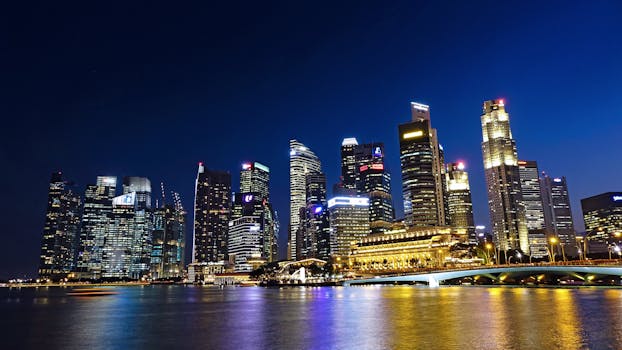
The island is a remarkable collision of Chinese, Malay, Indian, and Peranakan (Straits Chinese) cultures, each with its own food, architecture, and urban neighborhoods. The hawker center is Singapore's democratic institution — a food court with licensed stalls, government hygiene oversight, and dishes selling for S$3 that have won Michelin stars. The city's architecture ranges from colonial Raffles-era buildings to Foster + Partners and Hadid towers that define the Marina Bay skyline.
Singapore is a year-round destination with consistent equatorial climate (28–33°C throughout). The June–July and November–December school holiday periods are busiest. Tours start at €3,200 per person. Malaysia's Johor Bahru is 30 minutes across the Causeway; Batam Island (Indonesia) is 45 minutes by ferry.
最佳出游月份 — Singapore?
我们推荐的月份是 February–April. 以下是逐月规划参考。
精选体验 — Singapore
由我们的本地合作伙伴精心挑选的旅行体验。每次定制旅游都包含其中部分——或更好的选择。
行程样本
两个出发方案——您的实际行程将完全定制。我们从此出发。
7天经典线路
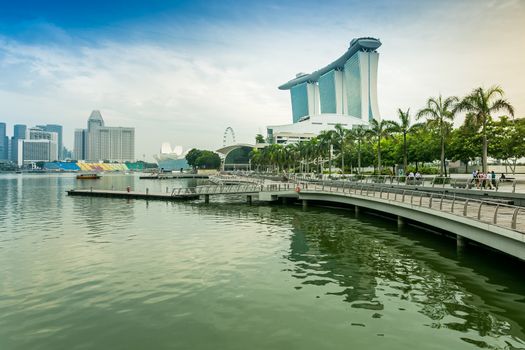
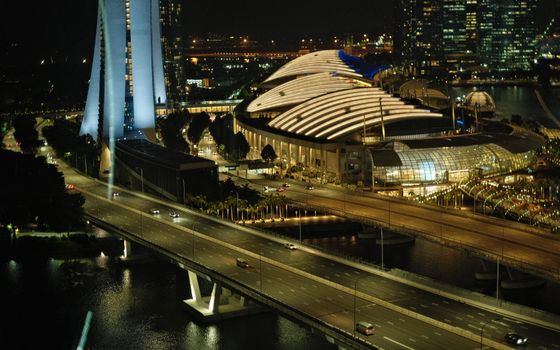
- 1第 1: Arrival & Marina Bay EveningCheck in near the Marina Bay area for the iconic skyline approach. Evening walk along the Marina Bay Sands promenade: the three tower hotel connected by a boat-shaped Sky Park at 57 floors, the Merlion fountain (half-lion, half-fish — Singapore's tourist symbol, invented in 1972 and officially a tourist attraction since 1997), and the Gardens by the Bay Supertree Grove lit after dark. First dinner at a hawker center — Newton Food Centre or Lau Pa Sat for a first survey of the city's democratic food culture.
- 2第 2: Gardens by the Bay at Dawn & Supertree Skyway6:30 a.m. at Gardens by the Bay: the Supertree Grove in morning mist before the crowds arrive. The OCBC Skyway bridge (connecting the two tallest Supertrees at 22m) is accessible from 9 a.m., but the grove itself is open and empty at dawn. Your guide explains the engineering: the 18 Supertrees use photovoltaic cells and act as exhausts for the cooled biomes. Then the Flower Dome and Cloud Forest conservatories (the latter replicating a tropical highland cloud forest at 23°C, in Singapore's 32°C climate).
- 3第 3: Hawker Center Food Education — Chinatown ComplexFull morning with a Singaporean food journalist: Chinatown Complex Hawker Centre — the largest in Singapore, 260 stalls, and the Hokkien mee stall that received a Michelin Bib Gourmand (high quality, low cost). The guide explains the individual dish traditions — Hokkien mee (stir-fried egg and rice noodles with prawns), char kway teow (flat rice noodles with cockles and Chinese sausage), chicken rice (Hainanese preparation specific to Singapore), and laksa (the coconut curry noodle soup that is Peranakan in origin). Lunch from four different stalls. Afternoon at the Chinatown Heritage Centre.
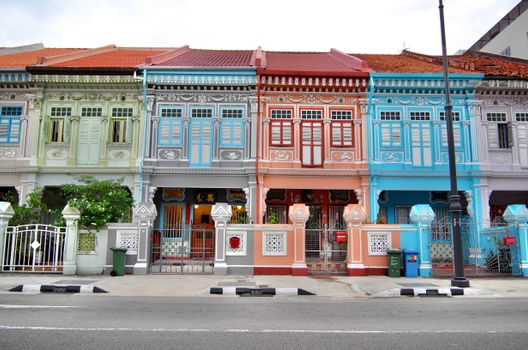
- 4第 4: Katong Peranakan Heritage WalkKatong in the east is Singapore's Peranakan (Straits Chinese) neighborhood — the culture created when Chinese migrants married local Malay women over centuries, producing a distinct language (Baba Malay), food (nyonya cuisine), and architectural style (the ornate shophouses on Joo Chiat Road, decorated with Chinese porcelain tiles and European pilasters). Your Peranakan cultural specialist walks the shophouse district and explains the cultural synthesis: the porcelain wedding sets, the beaded slippers, and the Nonya kueh (layered cakes) at the Katong bakeries.
- 5第 5: Little India & Arab StreetLittle India (Tekka Market, the Sri Veeramakaliamman Temple, the scent of jasmine garlands and incense) and Kampong Glam (the Sultan Mosque, the Malay Heritage Centre, and the Haji Lane boutiques that have made this the city's streetwear district) provide the other two corners of Singapore's ethnic mosaic. Your guide contextualizes the neighborhood histories: the Indian merchant communities, the Malay royalty's palace location, and how both neighborhoods survived Singapore's 1960s slum clearance largely intact.
- 6第 6: Sentosa & Southern IslandsSentosa Island is Singapore's resort development — Universal Studios, beach clubs, and the Resorts World casino. The correct approach: skip the theme parks and use the Sentosa Cove marina and the Palawan Beach on the south coast for swimming. Private boat from Sentosa to St John's Island (formerly a quarantine station, now a marine biology research reserve, accessible by prearrangement) for the clearest water within Singapore's territory.
- 7第 7: National Museum & DepartureThe National Museum of Singapore traces the island's history from a fishing village through Raffles's 1819 founding, the colonial era, the Japanese occupation (1942–1945), and the story of nation-building from independence. Your historian guide focuses on the Japanese occupation — three and a half years that the Singapore government has deliberately maintained in national memory as the formative experience of vulnerability. ArtScience Museum for the permanent Singapore installation. Changi Airport — a destination in itself.
14天深度游
- 1第 1: Arrival & Marina BayMarina Bay Sands skyline, Merlion fountain, Supertree Grove illuminated, Newton Food Centre hawker dinner.
- 2第 2: Gardens by the Bay at Dawn6:30 a.m. Supertree Grove in mist, OCBC Skyway bridge, Flower Dome and Cloud Forest biomes.
- 3第 3: Hawker Center Food EducationChinatown Complex 260 stalls, Hokkien mee Michelin Bib, four-dish lunch with food journalist.
- 4第 4: Katong Peranakan WalkJoo Chiat shophouses, Peranakan cultural specialist, nyonya cuisine, beaded slippers, porcelain tiles.
- 5第 5: Little India & Arab StreetTekka Market, Sultan Mosque, Haji Lane, Malay Heritage Centre.
- 6第 6: Sentosa & St John's IslandPalawan Beach swimming, private boat to marine research island, clearest Singapore water.
- 7第 7: National Museum & ArtScienceNation-building story, Japanese occupation memory, ArtScience Museum permanent Singapore exhibition.
- 8第 8: Jurong Bird Park & Nature ReservesThe Jurong Bird Park (now Bird Paradise at Mandai) is one of the world's largest and best-presented aviaries — 400 species in habitat-designed enclosures. Then: Sungei Buloh Wetland Reserve on the north coast, a Ramsar-designated tidal wetland where migratory birds from Siberia winter (October–March) and saltwater crocodiles inhabit the mangroves. Your naturalist guide provides context for both. Then the Mandai Rainforest Park for the Singapore Zoo's open-concept enclosures.
- 9第 9: Johor Bahru Day Trip — Malaysia30-minute bus across the Causeway to Johor Bahru, Malaysia's southernmost major city. The Johor Bahru City Square, the Istana Besar (the Sultan of Johor's former palace, now a museum), and the food markets where Malaysian hawker food (cheaper and less curated than Singapore's) is available at Malaysian prices. Return via the Second Link to Tuas for a different border crossing perspective.
- 10第 10: Singapore Architecture Walk — Civic DistrictSingapore's Civic District contains the colonial heritage buildings of Raffles-era Singapore alongside contemporary architecture: the old Parliament House (now the Arts House), the Victoria Theatre, the old Supreme Court (now the National Gallery, the world's largest collection of Southeast Asian art), and the new Supreme Court by Foster + Partners. Your architectural historian explains the conservation policy that preserved the colonial buildings while allowing the contemporary towers of Marina Bay to be built directly adjacent.
- 11第 11: Pulau Ubin — Singapore's Last Kampung20-minute bumboat to Pulau Ubin: the island off Singapore's northeast coast where kampung (village) life continues largely as it did before modernization. Rent a bicycle and cycle to the Chek Jawa Wetlands — a rare intertidal wetland with seagrass meadows, coral rubble flats, and mangrove swamps accessible on a 1km boardwalk. The island has no high-rises, no MRT, and approximately 30 residents. Singapore's development story, seen from its last unconstructed island.
- 12第 12: Singapore Botanic Gardens & Orchid ResearchThe Singapore Botanic Gardens (UNESCO, 1859) is the oldest tropical botanic garden in the world still functioning for research — it pioneered the orchid hybridization research that made Singapore the world's leading orchid exporter. The National Orchid Garden contains 1,000 species and 2,000 hybrids. Your botanist guide focuses on the hybridization lab history and the garden's role in the 20th-century rubber industry that funded Malayan development. Then: a Singapore Sling at the Long Bar of the Raffles Hotel (where the drink was invented in 1915) — the tourist experience that is also historically accurate.
- 13第 13: Omakase Dinner & Singapore Fine DiningSingapore has the highest density of Michelin stars per capita in Asia. A private reservation at an omakase (chef's selection) counter: Cantonese-Japanese fusion, Japanese kaiseki adapted to Singaporean ingredients, or a progressive Peranakan restaurant where the nyonya tradition is being reconsidered by chefs trained in France. Your food journalist guide books the reservation and provides the pre-dinner brief. The Singapore food story is: start at the hawker center (S$3), end at the omakase counter (S$300), understand both.
- 14第 14: Changi Airport Terminal & DepartureSingapore's Changi Airport is itself a destination: the Jewel rainforest mall (an indoor waterfall and garden complex connecting the three main terminals), the indoor waterfall 'HSBC Rain Vortex' (40m high, the world's largest indoor waterfall), and the rooftop Canopy Park with hedge mazes and sky nets above the rainforest. Arrive 3 hours before your flight, not 2. The airport experience is genuinely part of the Singapore tour.
实用信息
常见问题
Is Singapore worth visiting?+
Yes — for a set of reasons that aren't the ones usually cited. The hawker center food culture is the world's most democratic fine dining tradition. The ethnic neighborhood mosaic (Chinatown, Little India, Arab Street, Katong) concentrates more cultural diversity per square kilometer than any city in Southeast Asia. The infrastructure (airport, MRT, cleanliness) makes it the least stressful entry point to the region. And the story of what Singapore built from nothing in 60 years is genuinely interesting when told properly.
What is Singapore hawker culture and why does it matter?+
Singapore's hawker centers are UNESCO-listed as Intangible Cultural Heritage — a food culture where licensed stalls in government-maintained food courts serve single dishes (Hokkien mee, chicken rice, laksa, char kway teow) that stall owners have refined over decades. Multiple stalls have received Michelin recognition despite prices of S$3–6 per dish. The system was created in the 1970s when Singapore's street food vendors were licensed and relocated from the streets to purpose-built centers — maintaining the food traditions while improving hygiene. A food guide navigating a hawker center is the most important use of a guide in Singapore.
What are the best hawker centers in Singapore?+
Chinatown Complex (the largest, 260 stalls, the Michelin-recognized Hokkien mee), Maxwell Food Centre (the famous Tian Tian chicken rice), Lau Pa Sat (the historic Victorian cast-iron market converted to a food hall — the satay stalls set up outside from 7 p.m.), Old Airport Road Food Centre (the locals' choice for crayfish laksa and oyster omelette), and Newton Food Centre (convenient, tourist-friendly, and still genuinely good). A custom tour's food guide navigates the specific stalls at each — the context of which stall to choose among 40 selling the same dish matters.
What is Peranakan culture?+
Peranakan (also called Straits Chinese or Baba-Nyonya) culture developed from the 15th–17th century Chinese migration to the Malay peninsula. Male migrants married local Malay women; their descendants created a syncretic culture distinct from both parent cultures: Baba Malay language (Chinese vocabulary, Malay syntax), nyonya cuisine (Chinese cooking techniques with Malay spices and coconut milk), and elaborate material culture (the Peranakan beaded slippers, wedding sets in Chinese porcelain, and the ornate Joo Chiat shophouses). Singapore's Katong district and the Peranakan Museum in Armenian Street are the primary cultural resources.
Is Singapore expensive?+
By Southeast Asian standards, yes — comparable to European capitals. Hotels are comparable to London or Paris in the best areas. However, the hawker center food is genuinely affordable (a full meal S$4–8), the MRT is inexpensive and comprehensive, and the city's attractions (Botanic Gardens, most temples and cultural sites, Pulau Ubin, nature reserves) are free or low cost. The premium comes from accommodation, fine dining, and the Sentosa Resort World casino/theme park complex. A custom tour builds the itinerary to balance the hawker center experience with the upmarket options that make Singapore internationally distinctive.
大家还问
- Is Singapore worth visiting?
- What is hawker food in Singapore?
- How many days do I need in Singapore?
- Is Singapore expensive compared to other Asian cities?
- What is the best area to stay in Singapore?
- Is Sentosa Island worth visiting?
- What is Peranakan food?
- What is the best thing to do in Singapore?
准备好规划您的 Singapore之旅了吗?
与我们的AI礼宾助手交流——只需两分钟描述您的梦想旅行。