Individuelle Reisen nach Taipei
Hot springs, night markets, and the world's best xiaolongbao.
Was ist eine Individualreise nach Taipei?
A custom Taipei tour visits the National Palace Museum for the Jadeite Cabbage (the most popular single artifact in Asia, a piece of carved jadeite that looks exactly like a real Chinese cabbage) before 10 a.m. when the crowds build, rides the MRT to Jiufen for the goldmining town tea houses in the afternoon mist, eats beef noodle soup at a shop in Da'an District that has been perfecting the same recipe for 40 years, and watches Taipei 101 from the Elephant Mountain trail at sunset with the entire city below. The National Palace Museum requires a reserved time slot; Jiufen requires a weekday.
Taipei is a city of 2.6 million people (7 million in the metropolitan area) that has preserved more of traditional Chinese culture than any city in mainland China — the National Palace Museum houses 700,000 artifacts that were evacuated from Beijing in 1933 and brought to Taiwan by the retreating Nationalist government in 1949, the largest collection of Chinese imperial art in the world. The city is simultaneously modern (Taipei 101 was the world's tallest building from 2004 to 2010), progressive (the first country in Asia to legalize same-sex marriage), and deeply traditional: the night markets, the temple culture, and the tea house tradition of Jiufen are living practices rather than tourist reconstructions.
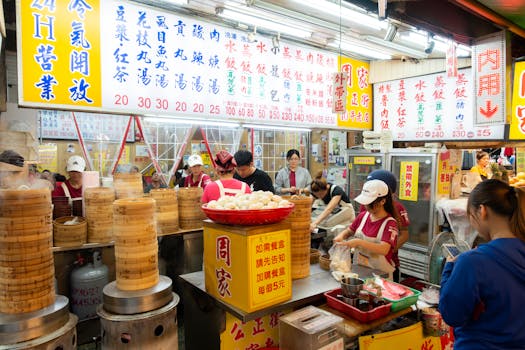
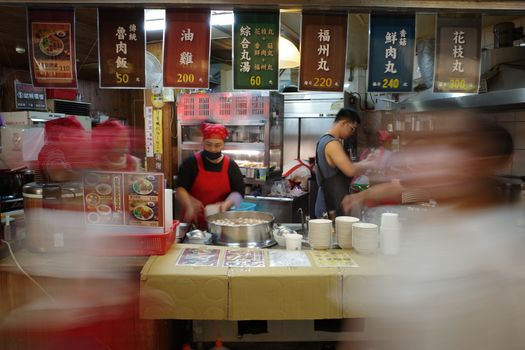
The food culture is the entry point. Taipei's night markets are different from each other — Shilin is the largest and most famous, Raohe is more concentrated and local, Ningxia is the old-town night market for oyster vermicelli and pig's blood cake, and the Gongguan student market runs late. The xiao chi (small eats) tradition — beef noodle soup, scallion pancakes, oyster omelette, stinky tofu, pineapple cake, and bubble tea (invented in Tainan in the 1980s before Taipei made it global) — defines street culture from 6 a.m. to 2 a.m.
October through December and March through May are optimal: temperatures 18–26°C, lower humidity, and the spring rhododendron season on Yangmingshan. June through September is hot (35°C+) and typhoon-affected — Taiwan sits directly in the West Pacific typhoon corridor. Tours start at €2,800 per person.
Was ist die beste Reisezeit für Taipei?
Unsere empfohlenen Monate sind October–December, March–April. Hier ein monatlicher Überblick mit Planungshinweisen.
Highlights in Taipei
Handverlesene Erlebnisse unserer lokalen Veranstalter. Jede Individualreise beinhaltet eine Auswahl davon — oder etwas noch Besseres.
Musterreiserouten
Zwei Ausgangspunkte — Ihre echte Reiseroute ist individuell. Wir bauen darauf auf.
7 Tage Klassiker
- 1Tag 1: Arrival & Shilin Night MarketTaiwan Taoyuan International Airport to Taipei by MRT (35 minutes, the most efficient airport connection in Asia). Check in, then Shilin Night Market — the largest night market in Taiwan: the underground food center (oyster vermicelli, scallion pancakes, large fried chicken, and the Shilin-specific taro ball soup), the outdoor stall lanes, and the tourist-visible but locally-used temple on the market's north end. First Taiwanese meal: braised pork rice (lu rou fan, minced pork belly slow-braised in soy and five-spice over white rice, topped with pickled radish) from a stall that has been serving the same recipe since the 1970s.
- 2Tag 2: National Palace Museum — Jadeite Cabbage & Imperial ArtThe National Palace Museum is the most important repository of Chinese imperial art in the world — 700,000 artifacts from the Song, Ming, and Qing dynasties, evacuated from the Forbidden City to Taiwan in 1949. Arrive at 9 a.m. when the doors open. The three essential works: the Jadeite Cabbage (a single piece of mottled jadeite carved into a perfect cabbage, a locust and a katydid hidden in the leaves — the most visited artwork in Asia, with specific Chinese cultural symbolism in every detail), the Meat-Shaped Stone (a piece of jasper carved to look exactly like a slice of braised pork), and the Mao Gong Ding bronze vessel (10th century BC, with the longest bronze inscription in existence). Your art historian provides context for the political history of why these objects are here.
- 3Tag 3: Jiufen — Goldmining Town Tea HousesJiufen is a former goldmining mountain town 40km northeast of Taipei, built on steep coastal hillsides above the Pacific — narrow red-lantern lanes, teahouses overlooking the Keelung harbor, and the aesthetic that inspired the animated film Spirited Away (the Miyazaki inspiration is debated, but the spiritual connection is unmistakable). Take a weekday bus (45 minutes) to avoid the weekend crowds. The red lantern staircase of Jiufen Old Street, the Amei Tea House (founded 1947, the most photographed teahouse in Taiwan), and the view over the northeast coast at 4 p.m. when the mist comes in from the Pacific. Return to Taipei for dinner.
- 4Tag 4: Longshan Temple & Wanhua DistrictLongshan Temple (1738) in Wanhua, the oldest district of Taipei, is the city's most important functioning temple — a syncretism of Buddhist, Taoist, and folk religion deities that reflects Taiwanese spiritual pragmatism: Guanyin (Buddhist goddess of mercy) and Mazu (Taoist sea goddess) share the same incense smoke. The courtyard is in use from 6 a.m. — elderly residents pray, fortune tellers operate on the surrounding lanes, and the incense density is overwhelming. Then: the Bopiliao Historic Block (18th–19th century merchant street, the best-preserved old street in Taipei) and the Hua Xi Street Night Market for snake blood whiskey and dried seafood.
- 5Tag 5: Taipei 101 & Da'an DistrictTaipei 101 observation deck (89th floor, 448m) is clearest in the first two hours after a rain when the air quality is highest. The tuned mass damper inside the building — a 660-tonne steel sphere on a cable system that counteracts typhoon and earthquake swaying — is visible from the 87th-floor exhibition. Then: Da'an District, Taipei's restaurant and café quarter. Beef noodle soup at a recognized shop on Jinshan South Road — the slow-braised tender beef shank in spicy tomato-chili broth is the most argued-about dish in Taiwanese cuisine. Evening: the Xinyi District rooftop bars.
- 6Tag 6: Yangmingshan National Park — Hot Springs & Volcanic LandscapeYangmingshan is a volcanic national park 20 minutes by bus from Taipei city center — fumaroles, sulfur vents, crater lakes, and the cherry blossom and azalea bloom that covers the mountain in March–April. The Xiaoyoukeng main crater area is accessible year-round; the sulfur steam makes the air recognizably volcanic. Then: a private hot spring (beitou or yangmingshan public baths) for the geothermal hot spring culture that Taipei has maintained since the Japanese colonial period (1895–1945) — the Japanese who built the Beitou hot spring infrastructure are acknowledged by the Taiwanese as having introduced the onsen tradition.
- 7Tag 7: Raohe Street Night Market & Elephant Mountain — DepartureFinal morning: Elephant Mountain (Xiangshan, 183m) trail — a 20-minute climb to the rock viewpoint above the Xinyi financial district, with Taipei 101 at eye level and the city spreading below in every direction. The sunrise from Elephant Mountain is the standard Taipei skyline photograph. Then: Raohe Street Night Market (the most concentrated market — 600m long, with the famous Black Pepper Bun bakery at the entrance whose line forms at 5 p.m., and the Songshan Ciyou Temple mid-market). Taiwan Taoyuan Airport via MRT.
14 Tage Tieftauchen
- 1Tag 1: Arrival & Shilin Night MarketAirport MRT 35 minutes, braised pork rice, oyster vermicelli, Shilin market underground food center.
- 2Tag 2: National Palace Museum — Jadeite Cabbage700,000 imperial artifacts, Jadeite Cabbage symbolism, Meat-Shaped Stone, Mao Gong Ding bronze inscription.
- 3Tag 3: Jiufen Tea HousesWeekday, red lantern staircase, Amei Teahouse 1947, Pacific mist at 4 p.m., Spirited Away aesthetic.
- 4Tag 4: Longshan Temple & Wanhua1738 temple, Buddhist-Taoist syncretism, fortune tellers, Bopiliao 18th-century merchant street.
- 5Tag 5: Taipei 101 & Da'an Beef Noodle660-tonne tuned mass damper, 89th floor post-rain clarity, slow-braised beef shank debate.
- 6Tag 6: Yangmingshan Hot SpringsVolcanic fumaroles, Japanese colonial onsen tradition, March azalea bloom, sulfur steam.
- 7Tag 7: Elephant Mountain Sunrise183m rock viewpoint, Taipei 101 at eye level, city panorama, Raohe Black Pepper Bun queue.
- 8Tag 8: Tainan — Taiwan's Ancient Capital90-minute HSR (high-speed rail) to Tainan: the first capital of Taiwan, founded in 1624 by the Dutch East India Company (VOC) and home to more temples per capita than any city in Taiwan. Fort Zeelandia (the Dutch fort, 1624), the Confucian Temple (1665, the first in Taiwan), and the Tainan city god temple. Tainan food: the best in Taiwan according to Taiwanese people — coffin bread (deep-fried toast filled with cream soup), milkfish congee, and shrimp roll. The bubble tea was invented in Tainan in 1986 (Hanlin Tea Room claims the original recipe).
- 9Tag 9: Tainan — Chimei Museum & ReturnThe Chimei Museum is Taiwan's most visited private museum — 14 galleries of Western art (the largest collection outside Europe of works by masters of the 17th–19th century), natural history, and a musical instrument collection. The founder Chi Wen-Long built it to bring European cultural experience to southern Taiwan. Return to Taipei by HSR afternoon.
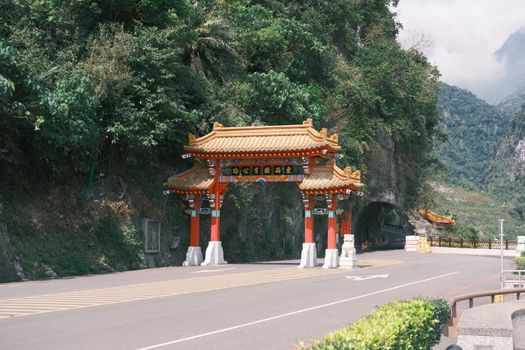
- 10Tag 10: Taroko Gorge — East Coast1.5-hour domestic flight or 2-hour train to Hualien on the Pacific coast. Taroko Gorge National Park: the most dramatic landscape in Taiwan — a 20km marble gorge carved by the Liwu River through the Central Mountain Range, with vertical walls rising 1,000m. The Shakadang Trail (east bank) and the Zhuilu Old Road (the original aboriginal hunting path cut into the cliff face above the gorge) are the two best walks. Your naturalist explains the geological process — the marble is metamorphosed from limestone when the Pacific plate subducted under Taiwan.
- 11Tag 11: Taroko — Aboriginal Triku CultureThe Triku (Taroko) aboriginal people have inhabited the Taroko Gorge since at least the 15th century — their weaving patterns (the distinctive geometric diamond-and-zigzag), the millet wine, and the traditional headhunting culture (ended under Japanese colonial administration in the 1910s) are documented at the Taroko National Park Visitor Centre and through your aboriginal cultural guide. Then: the Eternal Spring Shrine (Changchun), a waterfall temple built into the cliff face to commemorate the workers who died building the Central Cross-Island Highway in 1956.
- 12Tag 12: East Rift Valley — Cycling the Most Beautiful Bike PathThe East Rift Valley between Hualien and Taitung (150km of farmland between the Central and Coastal mountain ranges) is regularly cited as the most beautiful cycling route in Asia. Private bicycle on the back roads through rice paddies, hot spring communities, and Amis aboriginal villages. The valley is on the Pacific Ring of Fire and has multiple active fault lines — the landscape is geologically young and dramatic. Overnight at a small hotel in the valley.
- 13Tag 13: Green Island — Coral Reef Snorkeling45-minute ferry from Taitung to Green Island (Lyudao): a volcanic island with one of the best-preserved coral reefs in Taiwan and the most unique feature — a seawater hot spring that is one of only three seawater hot springs in the world (the others in Italy and Japan). Snorkel the reef: sea turtles resident, the coral recovering from the 1998 bleaching event. The prison that held political dissidents during the White Terror period (1949–1987) is now a Human Rights Memorial Park.
- 14Tag 14: Return Taipei & Final Night MarketMorning ferry back to Taitung, train or flight to Taipei. Final evening: Ningxia Night Market — the old-town market that locals use rather than tourists, for oyster vermicelli, taro balls, and the pig's blood cake on a stick. The market that has been feeding this neighborhood since before the Japanese colonial period. Taiwan Taoyuan Airport next morning.
Praktische Informationen
Häufig gestellte Fragen
What is the Jadeite Cabbage at the National Palace Museum?+
The Jadeite Cabbage (翠玉白菜) is a 19cm piece of Qing dynasty jadeite carved into a perfect Chinese cabbage, with a locust and a katydid hidden in the upper leaves. The cabbage's white-and-green mottling is entirely natural to the original stone. The symbolism: Chinese cabbage (bai cai) sounds like 'hundred wealth'; the insects represent fertility. It was made for the concubine Jin Fei in the 19th century and was displayed in the Forbidden City's Palace of Eternal Harmony. It is the most viewed single artwork in Asia. Arrive early — the display case has a persistent crowd.
What is the best night market in Taipei?+
Different markets serve different purposes. Shilin: largest and most varied, the reference for first-time visitors (underground food center has the best stall concentration). Raohe: most atmospheric, the Black Pepper Bun queue at the entrance, Songshan Ciyou Temple mid-market. Ningxia: the old-town market, for locals, with oyster vermicelli and pig's blood cake. Gongguan: the university student market, cheapest, latest opening (until 2 a.m.). A food guide navigating between markets by MRT provides the full picture in a single evening — each market is 20 minutes apart.
Is Jiufen worth visiting and when should I go?+
Jiufen is genuinely beautiful and worth visiting — the red lantern lanes, the Pacific view, and the teahouse culture are real, not constructed. The problem is popularity: on weekends (Saturday and Sunday) and public holidays, Jiufen's narrow lanes become impassable with visitors. Weekday afternoons (arriving around 2–3 p.m., leaving after the mist comes in at 4–5 p.m.) provide the experience the photographs depict. A private car or the Keelung bus on weekdays is the correct approach. The Amei Tea House (founded 1947) books in advance for window seats.
What is Taiwanese food and how is it different from Chinese food?+
Taiwanese cuisine is a hybrid of mainland Chinese regional cooking (the mainlanders who came in 1949 brought the cuisines of every province), Japanese colonial influence (the Japanese occupied Taiwan 1895–1945, leaving sashimi, hot spring culture, and bento culture), and indigenous Austronesian food traditions. The defining Taiwanese dishes: braised pork rice (lu rou fan), beef noodle soup (the mainland-origin dish that Taiwan has made its own), oyster omelette, scallion pancake, stinky tofu (fermented, strong-smelling, unavoidable), pineapple cake, bubble tea. The food culture is lighter, sweeter, and more herb-forward than most mainland Chinese regional cuisines.
How do I get around Taipei?+
The Taipei MRT is one of the best urban metro systems in Asia: clean, punctual (within 30 seconds of schedule), extensive (160+ stations), and air-conditioned. The EasyCard contactless payment covers MRT, buses, YouBike (bicycle sharing), and convenience store payments. Taipei 101, Longshan Temple, the night markets, and Da'an District are all directly MRT-accessible. Jiufen requires a bus or private car (MRT to Zhongxiao Fuxing, then direct bus). Yangmingshan requires a bus from the MRT Jiantan station. A private driver adds flexibility for the museum and night market combination — parking in Taipei is limited.
Andere fragen auch
- Is Taipei worth visiting?
- What is the best night market in Taipei?
- Is the National Palace Museum worth visiting?
- How do I get from Taipei to Jiufen?
- What is Taiwanese food?
- When is the best time to visit Taiwan?
- Is Taroko Gorge worth the trip?
- How many days do I need in Taipei?
Bereit, Ihre Taipei-Reise zu planen?
Chatten Sie mit unserem KI-Concierge — zwei Minuten für Ihre Traumreise.