
Индивидуальные туры в Pamukkale
Cotton castle travertine terraces over Roman Hierapolis.
Что такое индивидуальный тур в Pamukkale?
Pamukkale is best visited at 8 a.m. when the south gate opens — walk the white travertine terraces barefoot in early light, swim in the designated thermal pool, then explore Hierapolis ruins and its Antique Pool (Cleopatra's Pool) with submerged Roman columns. Allow a full day; combine with Aphrodisias (80 km east) for a second day.
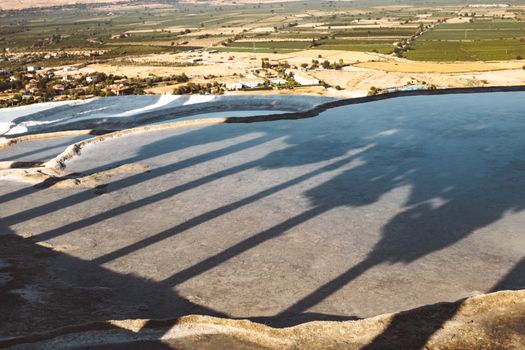
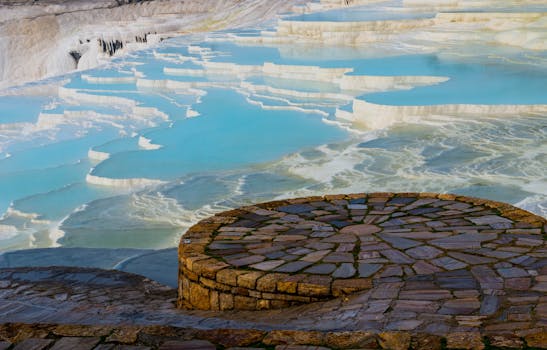
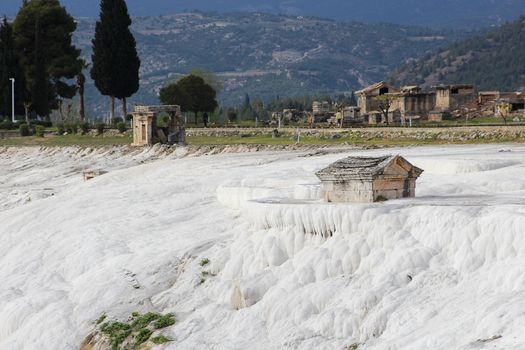
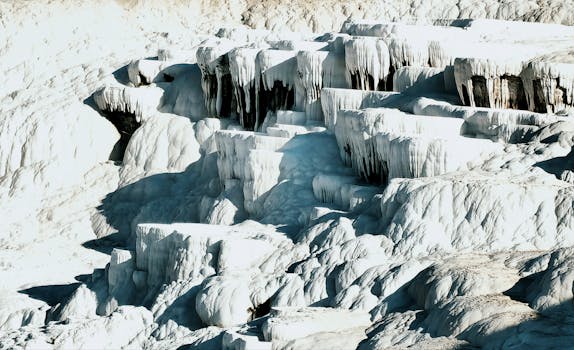
Pamukkale's white terraces — calcium carbonate deposited by 17 thermal springs at 35°C over millennia — cover a 2,700-metre cliff face above the Büyük Menderes plain. The correct name is travertine rather than limestone; the mineral supersaturation process creates new layers continuously, which is why the Turkish Department of Culture prohibits shoes on the terraces and limits swimming to a single designated pool. Arrive at the south gate at 8 a.m. when it opens — the terraces reflect the first light before direct sun reaches them, and the lower pools still hold overnight thermal water in the formations most suitable for photographs.
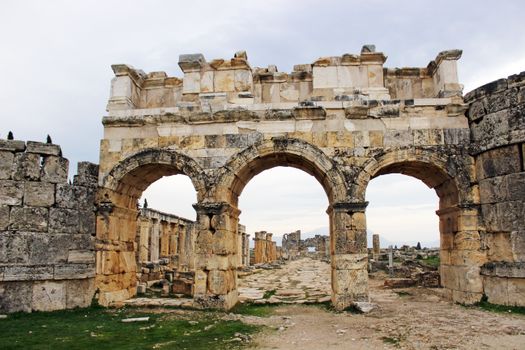
Above the travertine, Hierapolis is one of the best-preserved Greco-Roman cities in Turkey. Founded as a spa city by the Pergamene king Eumenes II around 190 BCE, it grew to 100,000 inhabitants under Roman rule; the Plutonium — a cave emitting toxic CO₂ that killed animals and birds instantly, surviving only as long as breath held — was interpreted as a gateway to the underworld, and the city's priests demonstrated divine protection by holding their breath longer than the animals they sacrificed. The Plutonium was rediscovered by Italian archaeologists in 2013 and is open to visitors through a gated barrier.
The Hierapolis Archaeological Museum occupies the restored Roman bath complex and holds finds from the city's exceptionally wealthy necropolis — 1,200 tombs spread over 2 km make it the largest Roman cemetery in Anatolia. The museum's sarcophagi room contains reliefs of Erotes (winged cupids) carrying garlands: standard Hierapolis funerary iconography suggesting the city's wealthy residents expected comfortable passage to the afterlife. Visiting hours are 8 a.m.–7 p.m. in summer; the museum is included in the site ticket.
Когда лучше ехать в Pamukkale?
Рекомендуемые нами месяцы April–June, September–October. Помесячный обзор с заметками по планированию.
Лучшие впечатления в Pamukkale
Тщательно отобранные моменты от наших местных операторов. Каждый тур включает часть из них — или что-то ещё лучше.
Примеры маршрутов
Два отправных пункта — ваш реальный маршрут создаётся индивидуально. Мы строим отсюда.
7 дней — классика
- 1День 1: Travertines at Dawn & HierapolisEnter via the south gate at 8 a.m. — remove shoes here, as required. Walk barefoot up the travertine terraces; the active thermal pools (designated by signage) are warm enough to sit in. Reach the top of the cliff by 9:30 a.m. before heat intensifies. The Antique Pool (Cleopatra's Pool) is a spring-fed 36°C swimming pool with genuine submerged Roman columns and capitals — swim between 2nd-century marble, €15 entry, open 8 a.m.–7 p.m. Lunch at a restaurant outside the north gate. Afternoon: Hierapolis necropolis (2 km walk, 1,200 tombs), the Plutonium gated CO₂ cave, and the theatre (12,000 seats, mountain backdrop). Museum at 4 p.m. before it closes.
- 2День 2: Aphrodisias — Goddess of Love's CityDrive 80 km east through fertile plains to Aphrodisias — arguably the finest ancient city in Turkey and dramatically undervisited compared to Ephesus. The stadium holds 30,000 spectators and is the best-preserved in the ancient world — walk the full 270-metre running track. The Temple of Aphrodite (1st century BCE) has 14 of its original 40 columns standing. The Aphrodisias Museum holds the most refined marble sculpture from any Anatolian site — the Penthesilea Amazon and the Zoilos reliefs depicting a Roman dignitary between Demos and the city goddess. Arrive at 9 a.m.; half-day is sufficient.
- 3День 3: Laodicea & ColossaeBiblical Laodicea (one of the Seven Churches of Revelation) is 8 km north of Pamukkale — the 2014–present excavation has uncovered a stadium, theatre, agora, and a remarkably complete street grid. The city was condemned in Revelation 3:16 for being 'neither hot nor cold' — a pointed reference to its position between the hot Pamukkale springs and the cold Colossae springs. Colossae itself (St. Paul's letter to the Colossians) remains unexcavated — a grassy mound 18 km east — but its theological importance and the fact of its being undigested by tourism make it an unusual pilgrimage stop.
- 4День 4: Kaklik Cave & Salda LakeDrive 45 minutes south to Kaklik Cave — an underground travertine system where thermal springs deposit calcium carbonate formations in a cave setting, effectively a subterranean Pamukkale with no crowds and free entry. Continue 60 km southwest to Salda Lake: alkaline mineral content produces white sandy beaches composed of hydromagnesite — the closest visual analogue to the Mars CRISM mineral maps, which is why NASA sent researchers here to study Mars surface conditions. Water is a vivid turquoise; swimming is permitted in the eastern section.
- 5День 5: Denizli Textile Quarter & Local HamamDenizli is Turkey's textile manufacturing capital — 60% of Turkish towels exported globally are produced here. The Kapalı Çarşı (covered bazaar) sells factory-seconds at wholesale prices; look for pestemal (flat-weave hammam towels) at €3–€8. Afternoon: a traditional hamam in central Denizli where locals outnumber tourists 20 to 1 — the antithesis of the tourist hamams near Pamukkale's north gate. The scrub and foam massage takes 45 minutes; bring flip-flops.
- 6День 6: Hierapolis Theatre Performance & Sunset TerracesThe Hierapolis International Festival (July–August) stages performances in the ancient theatre; check the programme and book in advance if visiting in season. Out of season, the theatre is the finest spot for a packed lunch with Pamukkale views — the stage faces the travertine cliff and the Büyük Menderes plain beyond. Return to the terraces at 5:30–6 p.m. for golden hour: the west-facing white calcium carbonate turns orange, fewer visitors remain, and the thermal pools are warmest after a full day of solar heating.
- 7День 7: Second Aphrodisias Visit & DepartureIf Day 2 felt rushed, return to Aphrodisias for the Tetrapylon (ornate 4-gateway ceremonial entrance, faithfully restored) and Odeon (small theatre-lecture hall) that time pressure may have cut short. Transfer to Denizli Çardak Airport (60 km west, 50-minute drive) for afternoon flights to Istanbul. Alternatively, take the daily direct train from Denizli to İzmir (3 hours, scenic Aegean valley route) if your itinerary continues northward along the coast.
14 дней — погружение
- 1День 1: Travertines at 8 a.m.South gate opening, barefoot thermal pool walk, Antique Pool Cleopatra swim, necropolis afternoon.
- 2День 2: Hierapolis Deep DivePlutonium CO₂ cave, 12,000-seat theatre, museum sarcophagi hall, sunset on the cliff.
- 3День 3: AphrodisiasBest-preserved ancient stadium in the world (30,000 seats), Temple of Aphrodite, marble sculpture museum.
- 4День 4: Laodicea & ColossaeBiblical cities of Revelation, unexcavated Colossae mound, theological pilgrimage with secular archaeology.
- 5День 5: Kaklik Cave & Salda LakeUnderground travertine cave (free, no crowds), NASA Mars-analogue lake with hydromagnesite beaches.
- 6День 6: Denizli & HamamTextile factory seconds bazaar (pestemal €3–8), local hamam with no tourist pricing.
- 7День 7: Laodikeia Excavation TourJoin active excavation tour (contact Pamukkale University archaeology department, July–August season).
- 8День 8: Priene & Miletus Day TripDrive 2 hours west: Priene grid-plan city on cliff above former sea bay, Miletus theatre (15,000 seats), Didyma Apollo oracle temple.
- 9День 9: Bodrum CoastContinue west to Bodrum: Crusader Castle of St. Peter, Halicarnassus Mausoleum site (one of the Seven Wonders), Bodrum Museum of Underwater Archaeology.
- 10День 10: Bodrum Peninsula VillagesGöltürkbükü waterfront, Türkbükü bay, Gümüşlük village (ancient Myndos), fish dinner on the water.
- 11День 11: Return via Hierapolis SunsetDrive back via Aphrodisias for a sunset circuit, dinner in Pamukkale village.
- 12День 12: Thermal Wellness DayFull morning in Antique Pool, afternoon facial clay treatment in Karahayıt (red mineral spring 4 km north).
- 13День 13: Çivril & AcıgölNortheast drive to Acıgöl crater lake (ancient volcanic maar), bird watching at Işıklı Lake.
- 14День 14: Final Travertines & DepartureLast sunrise walk on the terraces (north gate, 6:30 a.m. in summer), transfer to Denizli airport.
Практическая информация
Часто задаваемые вопросы
Can you swim in the Pamukkale travertine pools?+
Swimming is permitted only in the single designated thermal pool on the travertines — marked by signage and supervised by guards. The other travertine formations are protected; entering them with shoes is prohibited and swimming is not allowed as it disturbs the calcium carbonate deposition process. For a full thermal swim, the Antique Pool (Cleopatra's Pool) at the top of the site is the recommended option — 36°C spring water with submerged Roman columns, €15 entry.
How long should I spend at Pamukkale?+
A minimum of one full day covers the travertines and Hierapolis. Two days allows Aphrodisias (80 km, 2 hours by car) which many visitors consider the highlight of the region. If you add Laodicea, Kaklik Cave, and Salda Lake, three days fills naturally. The site is open daily 6 a.m.–8:30 p.m. in summer; arriving at opening (south gate) gives the best light and fewest crowds.
Is Pamukkale as white as in photos?+
The terraces are genuine calcium white with thermal pools — but tourist volume and the restriction of water flow to certain sections means some upper terraces appear drier and grayer than promotional photos suggest. The most actively flowing and vividly white sections are in the lower-mid cliff. Early morning gives the most accurate representation of the classic image. Karahayıt (4 km north) has red travertines from different mineral content, less visited but similarly dramatic.
How do I get to Pamukkale from Istanbul or Izmir?+
From Istanbul: fly to Denizli Çardak Airport (90 min; Turkish Airlines and Pegasus daily flights), then taxi 60 km to Pamukkale (45 min, €25–€30). From İzmir: bus to Denizli takes 3–4 hours (Pamukkale and Kamil Koç companies run hourly); Denizli bus station has regular minibuses (dolmuş) to Pamukkale village. From Ephesus or Selçuk: bus via Aydın, 2.5 hours.
What is Aphrodisias and why is it better than Ephesus?+
Aphrodisias is the ancient city of Aphrodite 80 km east of Pamukkale — founded around 5,500 BCE, developed into a major Greco-Roman city. Unlike Ephesus, Aphrodisias was covered by the village of Geyre until the 1960s, meaning it was preserved under agricultural soil rather than looted for building material. The result is extraordinary marble sculpture quality in the museum, the most complete ancient stadium in existence, and a fraction of Ephesus's visitor numbers. Turkish archaeologists have been excavating since 1962 and permit a small academic tour during the July–August season.
Также спрашивают
- How far is Pamukkale from Cappadocia?
- What is the best time of day to visit Pamukkale?
- Can I combine Pamukkale and Ephesus in one trip?
- Why are the Pamukkale terraces white?
- Is Aphrodisias worth visiting from Pamukkale?
- What is the Antique Pool at Pamukkale?
- Are there good hotels near Pamukkale?
- What happened to Hierapolis ancient city?
Готовы спланировать тур в Pamukkale?
Поговорите с нашим AI-консьержем — двух минут достаточно, чтобы описать идеальное путешествие.